


 Platinum
 White gold
 Yellow gold
 Red gold
 Rose gold
 Silver
 Titanium



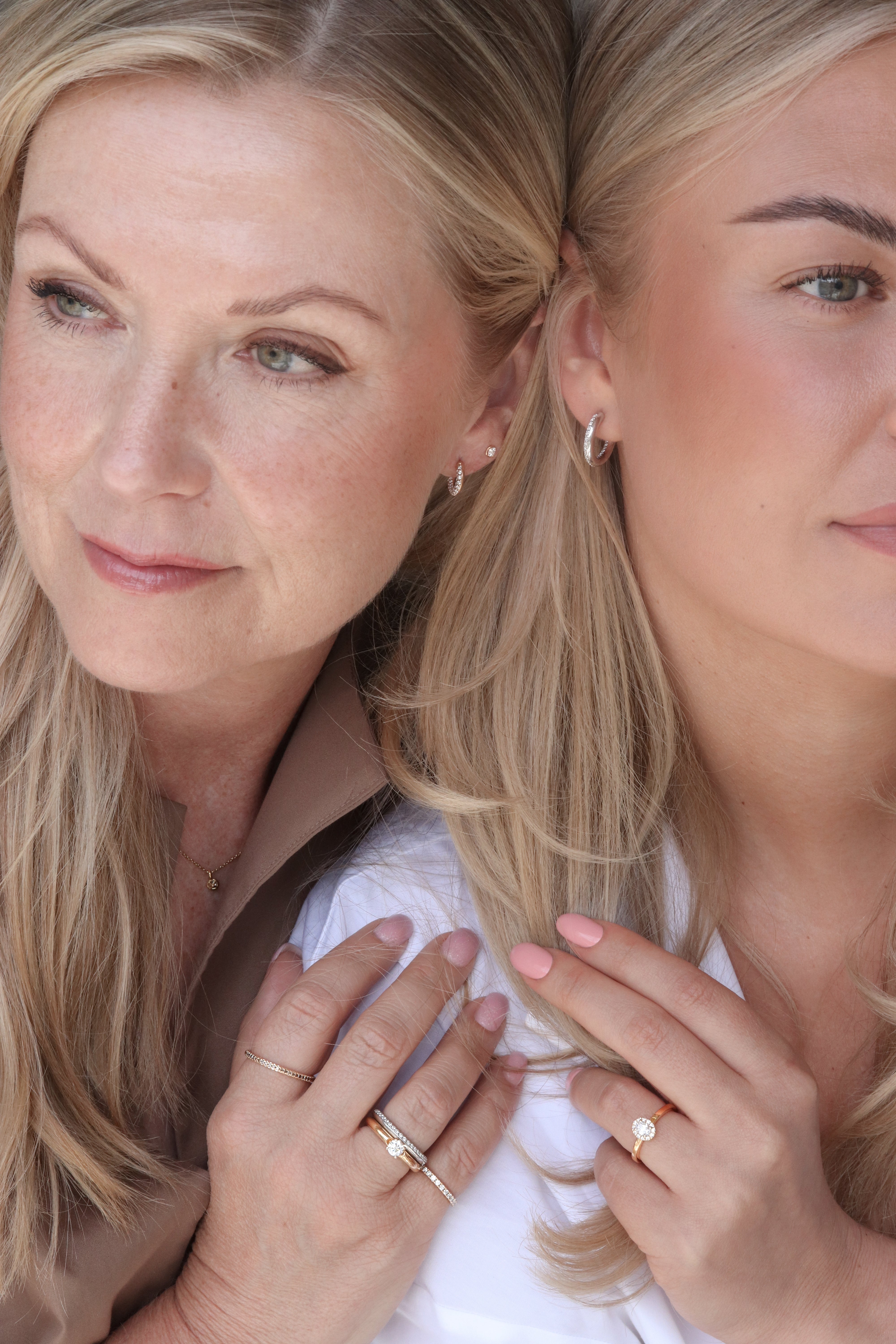
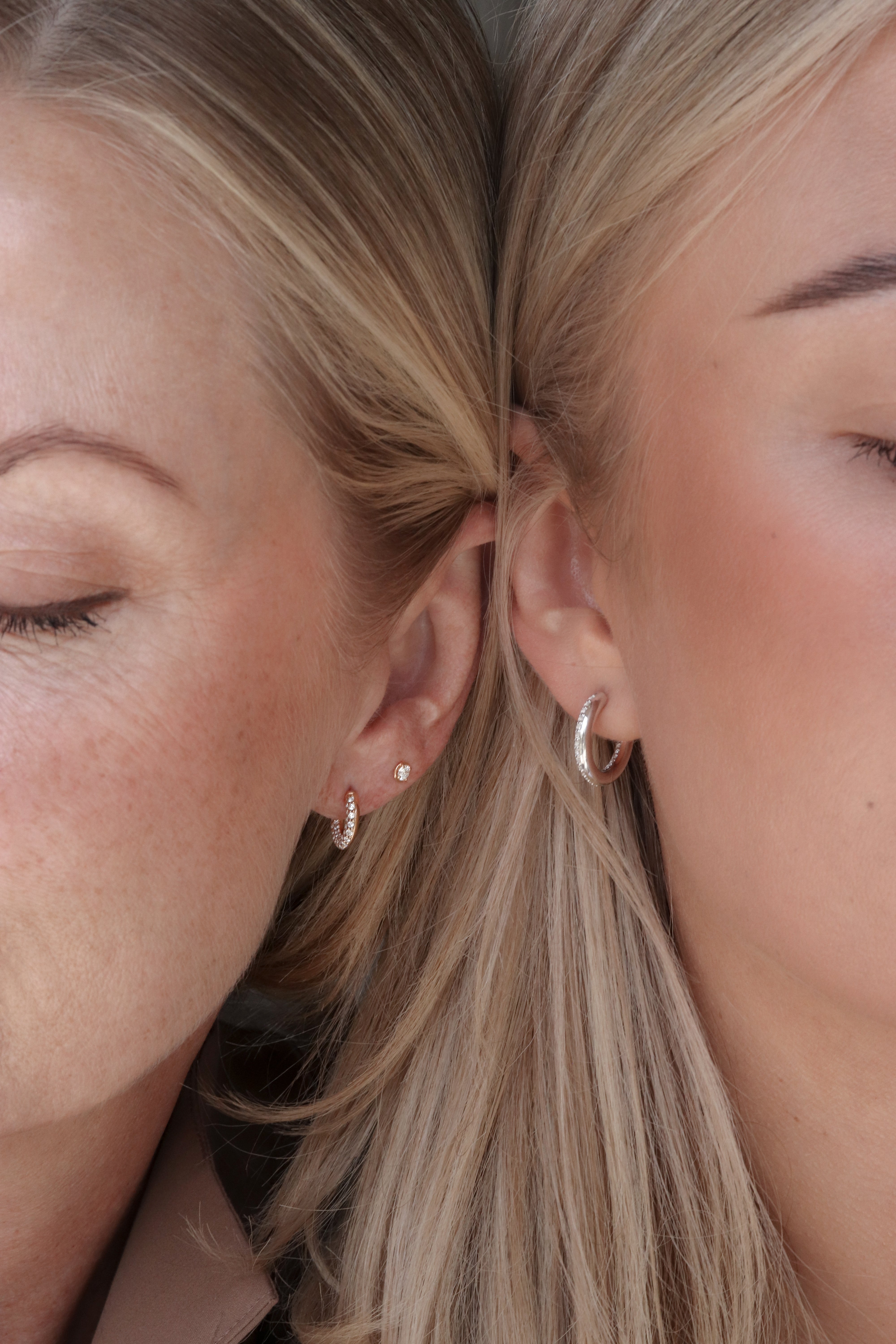
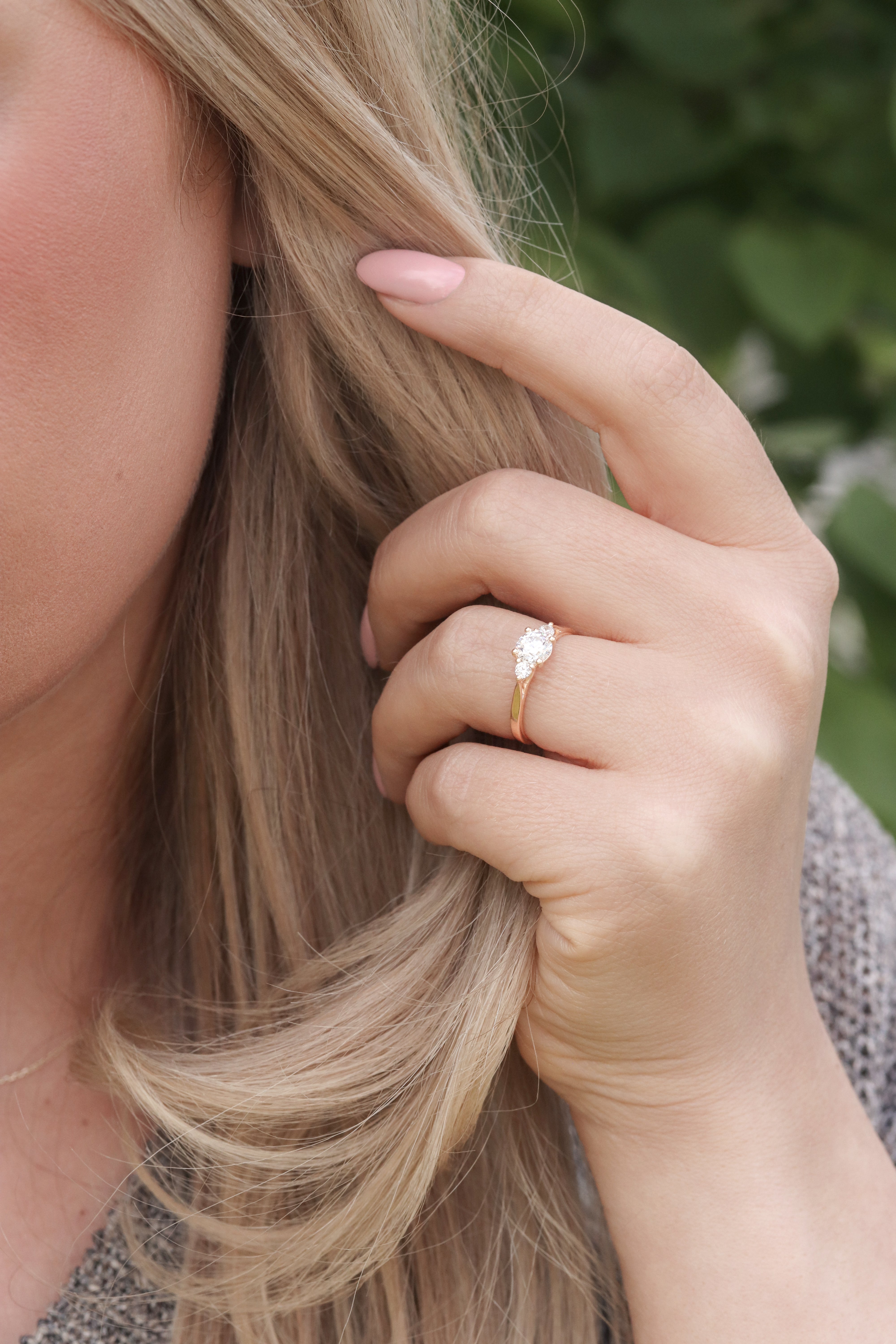
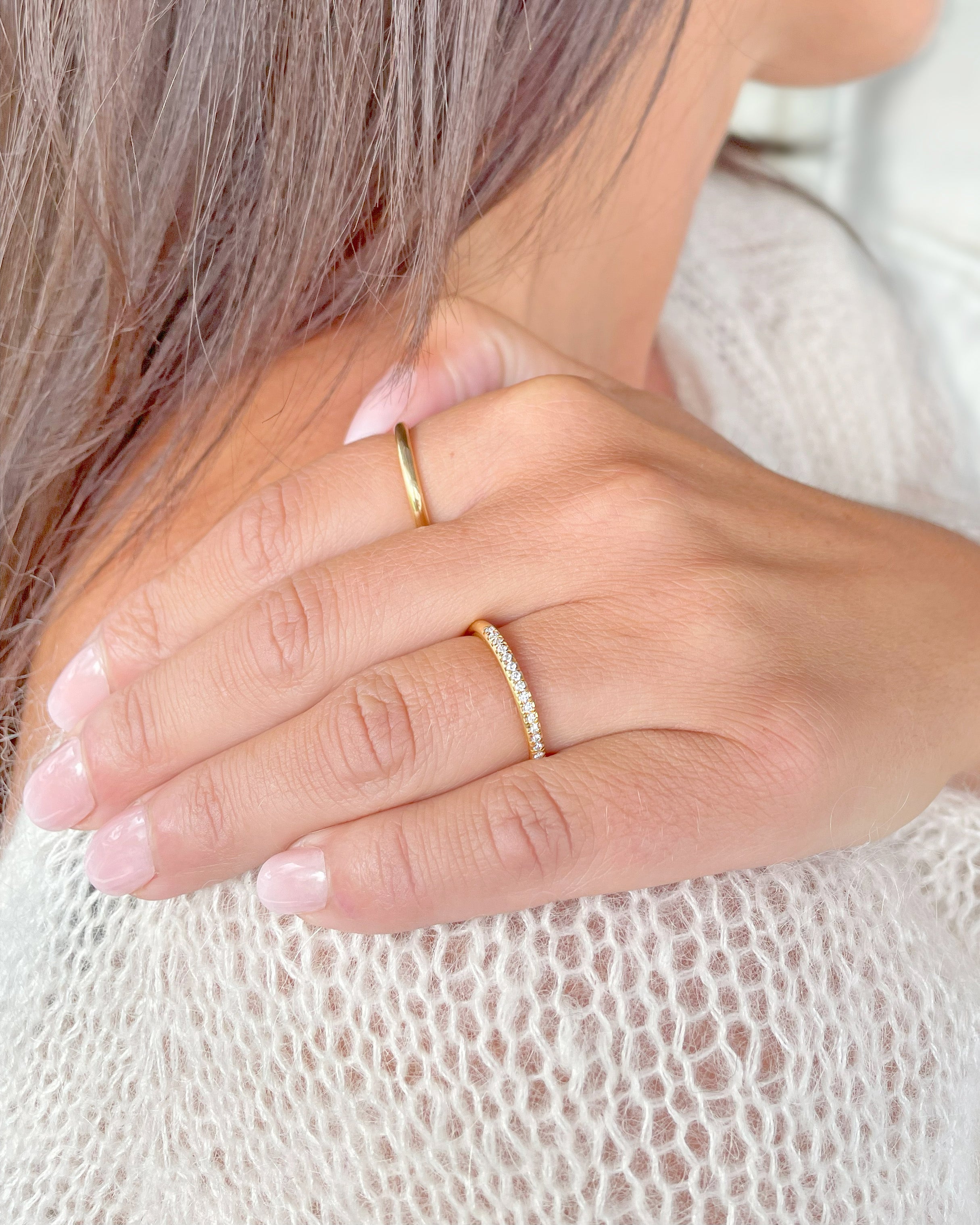

About our diamonds
Are you ready to learn more about our shimmering diamonds? On this page, we'll go over everything from what a carat actually is to the difference between a natural and a lab-grown diamond.
We dive right into what are known as “ the four Cs ”; Carat, Color, Clarity and Cut. Together, each part contributes to a diamond’s value and below you will get an introduction to them.

About our diamonds
1. Carat
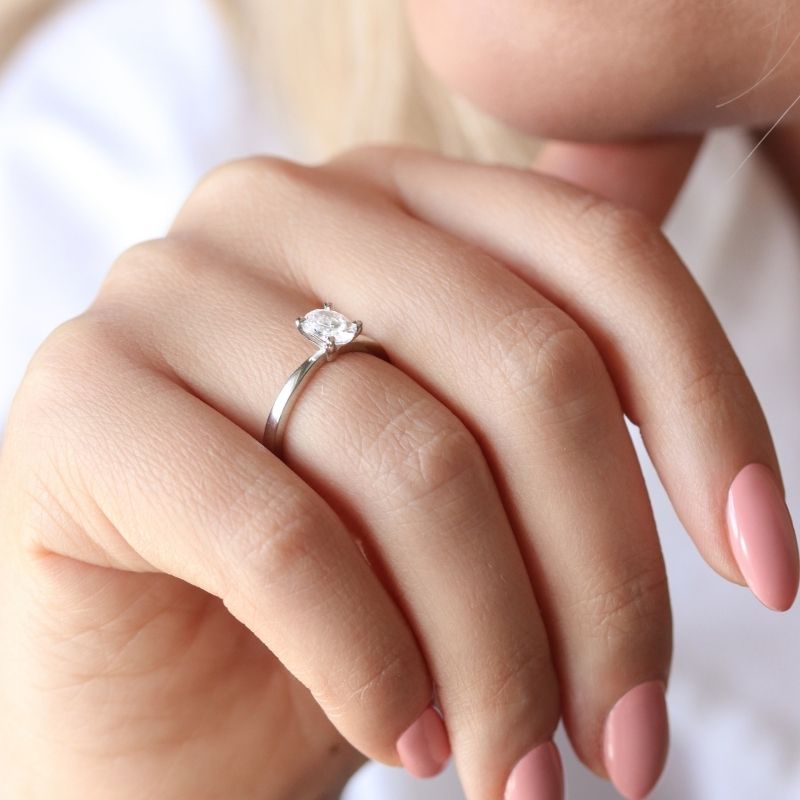
Carat is a unit of weight used for all kinds of gemstones where 1.00 Carat (ct) = 0.2 grams.
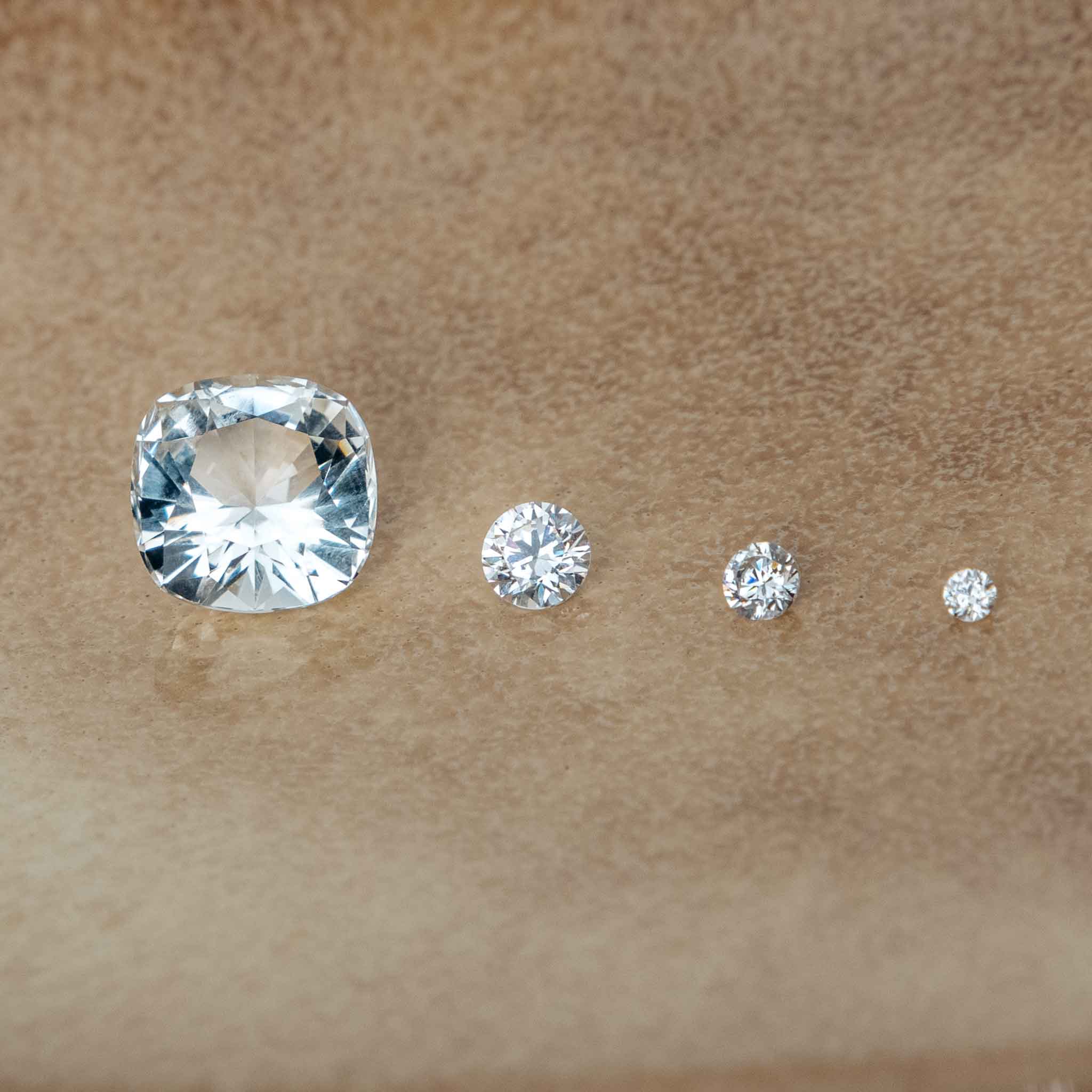
Number of carats together with the stone's cut form and cut quality determine how large the stone is perceived. A well-cut diamond often has a larger diameter than diamonds with a worse cut.
The price of diamonds rises exponentially, making a single 1.00 ct diamond cost significantly more than two 0.50 ct diamonds. Note that carats with c should not be confused with karats with k which instead indicate the amount of fine gold in a gold alloy.
About our diamonds
2. Color
When talking about the color of a diamond, it is usually the colorlessness of the stone that is discussed. The scale goes from completely colorless white to yellow and even brown color of the diamond. Although diamonds occur in many exciting colors, it is the white diamond that is most prominent in wedding and engagement rings.
At Schalins, we primarily work with brilliant-cut diamonds in the color Wesselton (H), which is also the color we have in our oval-cut diamonds. We have princess-cut and emerald-cut diamonds in the color Top Wesselton, which is a rare white color (F&G).

About our diamonds
3. Clarity
Clarity stands for the clarity of the stone and refers to how clean the stone is from internal and external defects. These defects can be found as small inclusions, often in the form of small gas bubbles or as traces of another mineral, for example sapphire.
The measurement of inclusions is first carried out with very strong magnification and then gradually decrease in the degree of magnification. The grading given refers to the purity of the stone at 10 times magnification.
From 0.005 to 0.035 carat we use the quality SI while from 0.04 carat we use VS. An exception is princess-cut diamonds, which regardless of size are VS.

About our diamonds
4. Cut
Cut refers not only to the shape the diamond is cut into but also how well it is cut. A well-cut diamond reflects and refracts light in a fantastically shimmering way, making it important not to overlook the quality of the cut when choosing a diamond.
But you as a customer don't need to worry about this, as we at Schalins are very careful about the cutting when we purchase diamonds.
All diamonds that are at least 0.50 carat are either Excellent or Very Good. A well-cut diamond is often larger in diameter than one with a lower cut quality, which makes the well-cut stone perceived as larger.
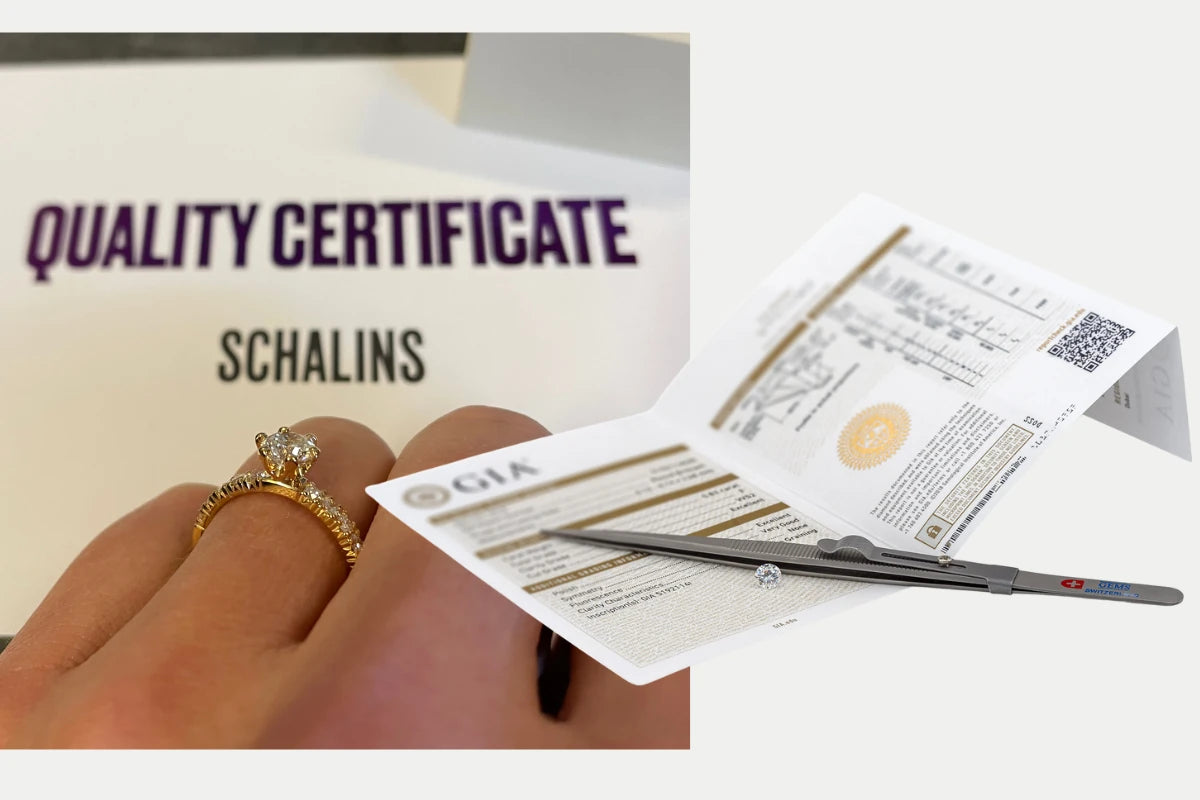
Now that we have gone through the four C's, we hope that you as a customer understand that at Schalins we take our job very seriously so that the diamonds in your ring will shine in the sun. All diamonds are handpicked and checked to ensure they truly meet our high standards so we can deliver a high quality ring to you.
When you order a diamond ring from Schalins, a certificate is included in which the information about the diamond(s) is written down. Be sure to take good care of your certificate, as it is a document of value.
For diamonds from 0.50 ct, you also receive an international certificate. You also get this certificate if you order a ring with a lab-grown diamond from 0.50 ct.
Conflict-free diamonds
It is of course important to us that we do not trade in diamonds whose income contributes to conflicts or other abuses. We purchase our diamonds from European suppliers based in Antwerp where the diamonds are conflict-free according to The Kimberley Certification Scheme (KPCS).
We also require our suppliers to be certified members of The Responsible Jewellery Council (RJC). RJC members commit to working in accordance with an international standard that aims to create responsible business practices throughout the diamond industry supply chain. This includes human rights, labor law, environmental impact and many other important issues related to the diamond trade.
Lab Grown Diamonds
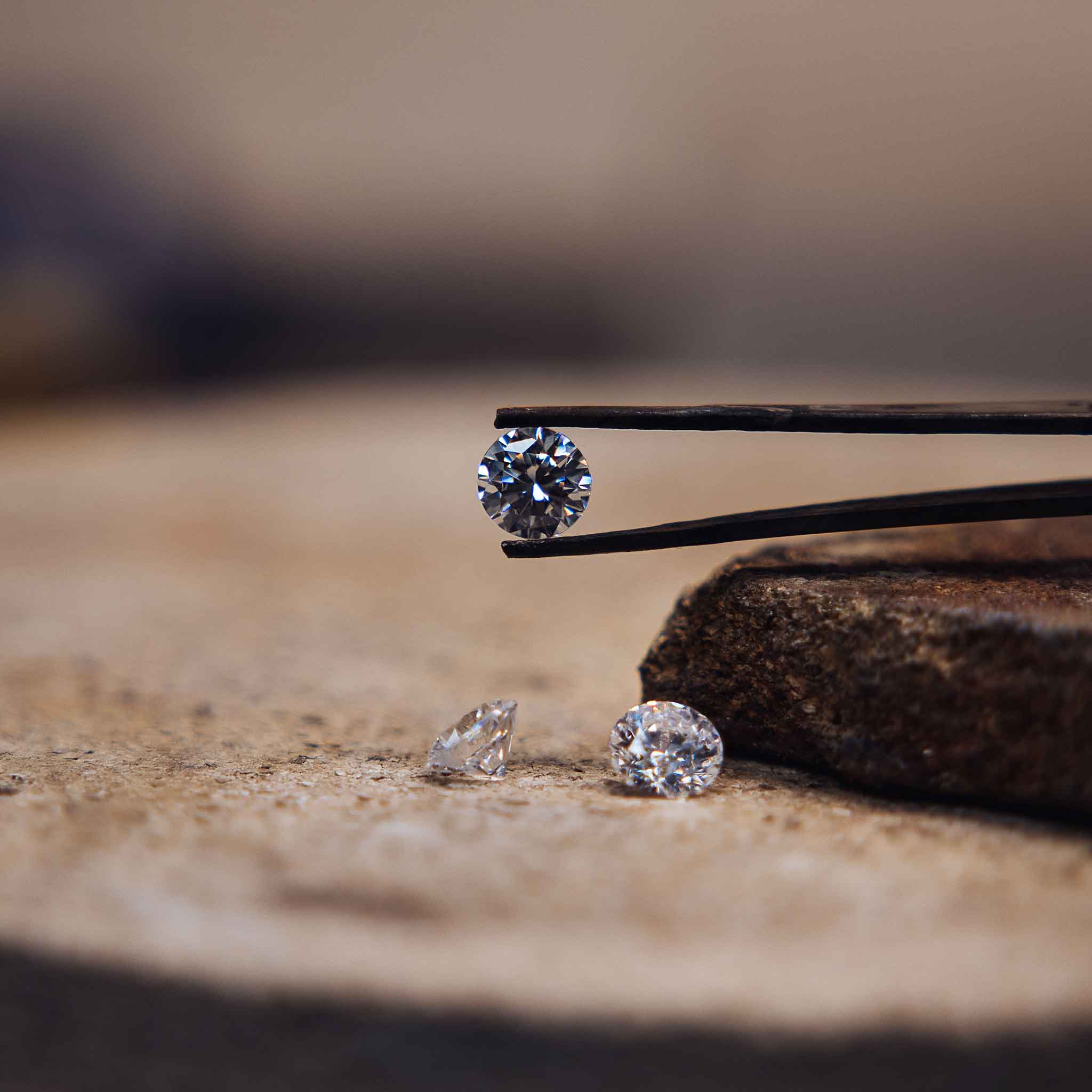
At Schalins, we offer both natural diamonds and synthetic diamonds “Lab Grown”. A Lab Grown diamond is another term for synthetic diamond, that is, a diamond that has been produced in a factory by man instead of having formed naturally beneath the surface of the earth.